
When Fátima Bosch Fernández walked off stage during a sash ceremony in Thailand on November 4, 2025, no one expected her to stand atop the Miss Universe podium three weeks later. But that’s exactly what happened. The 25-year-old Mexican model, born May 19, 2000, was crowned Miss Universe 2025 on November 21 at the Impact Challenger Hall in Pak Kret, Nonthaburi, after a scandal that rocked the pageant world — and turned her into a global symbol of resilience. What began as a public scolding by Nawat Itsaragrisil, the national director of Miss Universe Thailand, ended with Bosch emerging not just as a winner, but as a voice for authenticity in an industry often criticized for conformity.
The Moment That Changed Everything
It happened during a low-key promotional event on November 4. Itsaragrisil, visibly frustrated, publicly chastised Bosch for refusing to promote Thailand as part of the pageant’s local outreach. "You’re dumb," he reportedly said, according to multiple contestants who witnessed it. Bosch didn’t argue. She didn’t cry. She simply turned and walked out. Within minutes, a ripple effect began. Miss Universe 2024, Victoria Kjær Theilvig from Denmark, followed her offstage. Then another contestant. Then another. By the end of the night, nearly a dozen delegates had left the venue in silent protest. Social media exploded. #WalkOutWithFátima trended in 47 countries.A Pageant Under Scrutiny
The controversy didn’t fade. It intensified. On November 20, just one day before the finale, former French soccer star Claude Makélélé, one of the competition’s judges, announced his resignation on Instagram. "I hold Miss Universe in the highest regard," he wrote. "But I cannot be part of a process that silences dignity." His departure sent shockwaves through the organization. The Miss Universe Organization, which licenses national pageants and oversees the global event, refused to comment when contacted by CNN — a silence that only fueled speculation. Meanwhile, the contestants themselves became the story. Interviews revealed a quiet but powerful solidarity. "We didn’t speak about it," said Miss Jamaica, "but we all knew. We were watching how she carried herself. That’s when we knew she was going to win. Not because she was the prettiest. Because she was the truest."
The Night She Won
The finale on November 21 was electric. Hosted by American comedian Steve Byrne and opened by Thai pop star Jeff Satur, the event drew over 12 million viewers worldwide — a record for the modern era. The top five were announced in order: Ivory Coast’s Olivia Yacé, Philippines’ Ahtisa Manalo, Venezuela’s Stephany Abasali, Thailand’s Praveenar Singh, and finally, Mexico’s Fátima Bosch Fernández. Her answers during the final Q&A were unscripted, raw. Asked what global issue she’d bring to the United Nations, she said: "Neurodiversity. Not as a charity case. As a strength." She spoke about being diagnosed with dyslexia and ADHD at age 12, how teachers told her she’d never succeed in fashion — her dream. "They said my mind worked too fast. Too differently. But my mind didn’t break. It built." Her closing line — "Believe in the power of your authenticity. Your dreams matter, your heart matters. Never let anyone make you doubt your worth" — became the night’s most shared clip. TikTok alone recorded 42 million views in 24 hours.A Legacy of Mexican Triumph
Bosch is now the fourth Mexican woman to win Miss Universe, joining Lupita Jones (1991), Ximena Navarrete (2010), and Andrea Meza (2020). Her win comes after a decade of declining global interest in traditional pageants — a trend many blamed on outdated standards. But Bosch’s victory, framed not as perfection but as persistence, may have shifted the narrative. Her background is as unconventional as her win. Trained in fashion design at the Istituto Marangoni in Milan and the Fashion Institute of Technology in New York, she’s spent the last two years volunteering with youth programs for neurodivergent students in rural Mexico. Her national win on September 13, 2025, in Zapopan, Jalisco, was quiet. No fireworks. Just a quiet nod from outgoing titleholder Fernanda Beltrán. But this time, the world was watching.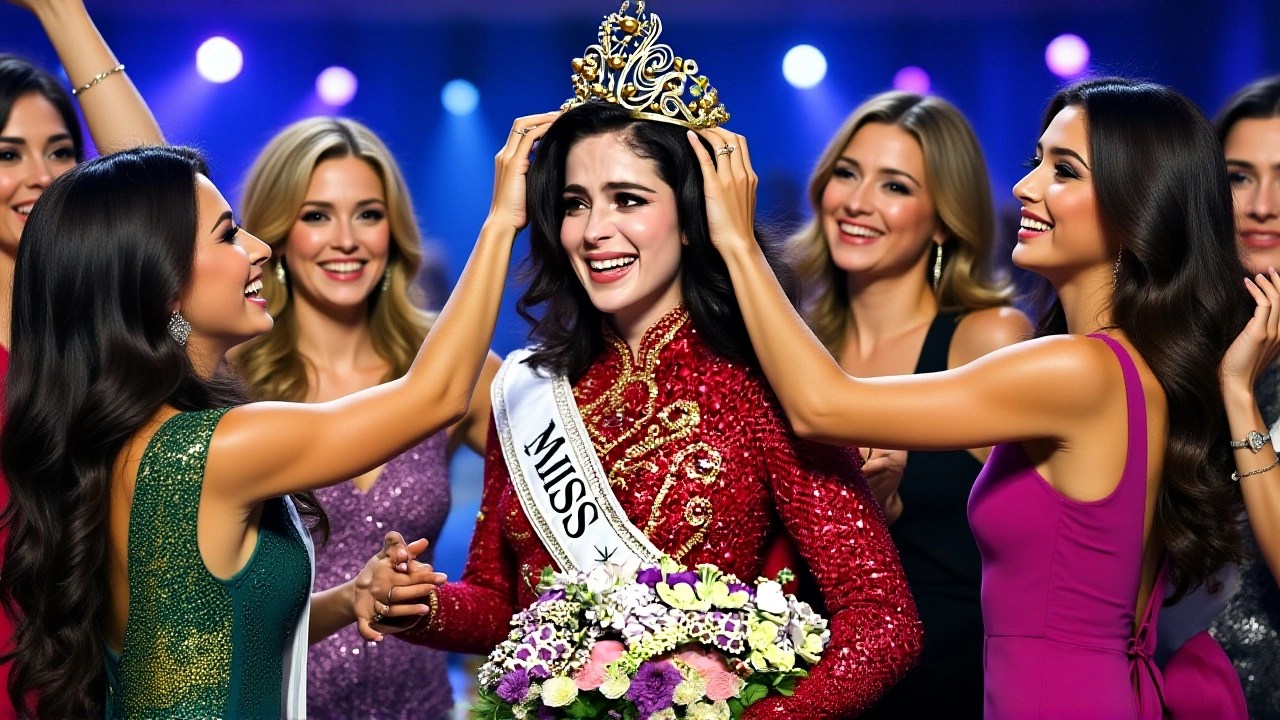
What Happens Now?
The Miss Universe Organization has yet to address the controversy publicly. Nawat Itsaragrisil has not issued a formal apology, though he stepped down from his national director role on November 25. Meanwhile, Bosch has already begun planning a global tour with UNICEF to promote neurodiversity education in schools. Her first stop? Thailand. "They tried to make me small," she told reporters after the crowning. "But I’m not here to please them. I’m here to change the game."Frequently Asked Questions
Why did Fátima Bosch Fernández walk out of the sash ceremony?
She walked out after Nawat Itsaragrisil, Miss Universe Thailand’s national director, publicly called her "dumb" for refusing to promote Thailand during a promotional event. The reprimand was widely seen as humiliating and unprofessional, prompting immediate solidarity from other contestants and Miss Universe 2024, Victoria Kjær Theilvig, who also left the venue.
How did the controversy affect the competition’s outcome?
Rather than harming her chances, the controversy amplified her message of authenticity and resilience. Contestants rallied behind her, judges resigned in protest, and public sympathy surged. Her victory speech, centered on neurodiversity, resonated globally — turning a scandal into a defining moment for the pageant’s modern evolution.
What is Fátima Bosch Fernández’s background in fashion and advocacy?
Educated in fashion design at Istituto Marangoni in Milan and FIT in New York, Bosch has worked with sustainable fashion labels in Mexico and the U.S. She’s also a volunteer mentor for neurodivergent teens, helping them navigate education and self-expression. Her openness about living with dyslexia and ADHD has made her a role model for young people who feel marginalized by traditional standards.
Who are the other Mexican Miss Universe winners?
Before Fátima Bosch Fernández, three Mexican women have won: Lupita Jones in 1991, Ximena Navarrete in 2010, and Andrea Meza in 2020. Bosch joins them as the fourth, and her win is notable for its emphasis on personal authenticity over conventional beauty standards — a stark contrast to earlier eras of the pageant.
Why did Claude Makélélé resign as a judge?
The former French soccer star stepped down on November 20, 2025, citing "unforeseen personal reasons" in an Instagram post. However, his statement — "I hold Miss Universe in the highest regard" — was widely interpreted as a quiet condemnation of the organization’s handling of the controversy. His resignation came just one day before the finale and added pressure on the Miss Universe Organization to respond.
What’s next for Fátima Bosch Fernández?
She has already partnered with UNICEF to launch a global initiative called "Mind Over Mask," focused on neurodiversity education in schools. Her first tour stop is Thailand, where she plans to meet with educators and students affected by the controversy. She’s also launching a line of adaptive fashion designed for neurodivergent youth, blending her design background with her advocacy.